Building permits in Delaware are not optional for most renovation projects. They exist to ensure that work meets minimum safety standards and that your home’s systems are safe for you and future occupants. Beyond safety, unpermitted work creates real problems at sale: buyers’ lenders often require proof that improvements were permitted and passed inspection, and title companies increasingly flag unpermitted additions as encumbrances.
This guide explains how Delaware’s permitting system works, what requires a permit, how the process differs across the state’s three counties, and what happens if work is done without the required permits.
How Permitting is Organised in Delaware
Delaware does not have a single statewide permitting system. Instead, permits are issued at the county level for unincorporated areas and at the municipal level for incorporated cities and towns. This means where your project is located determines who issues your permit.
County jurisdiction
If your property is in an unincorporated area of New Castle, Kent, or Sussex County, you apply for permits through the county building department. Each county has adopted its own local building code amendments on top of the state standard.
Municipal jurisdiction
If your property is within an incorporated city or town — including Wilmington, Newark, Dover, Georgetown, Milford, Smyrna, and others — you apply for permits directly from that municipality’s building department. Many of these municipalities have their own local amendments to state and county codes. The City of Dover, for example, requires a local business licence for contractors in addition to state registration.
Finding your jurisdiction
Your property tax bill identifies your municipality. If you are in an unincorporated area, it will show only the county. Your contractor should know which jurisdiction applies to your project, and this should be confirmed before the permitting process begins.
What Requires a Permit in Delaware
The general rule in Delaware is that any construction, alteration, renovation, or repair that affects the structure, safety systems, or energy performance of a building requires a permit. Routine maintenance and cosmetic improvements generally do not.
Work that typically requires a permit
- New construction of any structure
- Additions to an existing home (room additions, decks, garages)
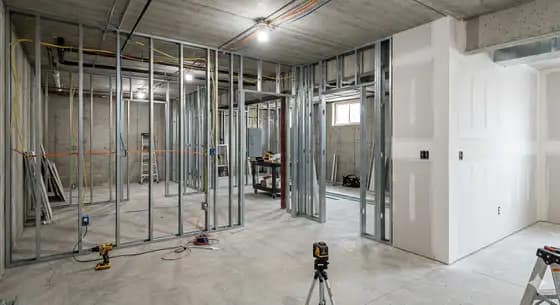
- Basement finishing that adds habitable square footage
- Installing or replacing electrical wiring, panels, or service
- Installing or replacing plumbing fixtures, water heaters, or sewer lines
- Installing or replacing HVAC systems
- Structural alterations including removing or adding load-bearing walls
- Installing egress windows in a basement
- Building a fence over a certain height (height thresholds vary by municipality)
- Installing a swimming pool or spa
- Re-roofing (in most Delaware jurisdictions)
- Replacing windows (in most jurisdictions, depending on scope)
Work that typically does not require a permit
- Interior painting and wallpaper
- Floor covering replacement (carpet, LVP, tile) without structural work
- Cabinet replacement without plumbing relocation
- Countertop replacement
- Minor drywall repairs (patching holes, replacing small sections)
- Installing pre-made shelving not attached to structural members
- Replacing fixtures in kind (same location, same specification)
- Replacement windows in the same opening without structural modification (in most jurisdictions)
These are generalisations. Rules vary by jurisdiction, and your local building department is the authoritative source for your specific project and location. When in doubt, call and ask. It costs nothing to ask and potentially thousands to fix unpermitted work later.
Permits by County
New Castle County
New Castle County processes permits for unincorporated areas through its Department of Land Use. The county has a more complex permitting system than Kent and Sussex counties, reflecting the higher density of development and greater volume of projects.
Permit fees in New Castle County are based on the construction valuation of the project, with additional fees for trade permits (electrical, plumbing, mechanical). Projects near environmentally sensitive areas such as floodplains or wetlands may require additional reviews from the Delaware Department of Natural Resources and Environmental Control (DNREC).
For projects within incorporated municipalities in New Castle County, including Wilmington, Newark, Middletown, and others, permits are issued by the municipal building department rather than the county. Each municipality processes permits independently and may have different fee schedules, review times, and local code amendments.
Kent County
Kent County issues permits through the Kent County Levy Court for unincorporated areas. Online permit applications are available through the county’s permit portal, which allows homeowners and contractors to submit applications and track status online. Kent County has adopted the International Residential Code as the standard for one- and two-family dwellings.
The City of Dover, which is the county seat, processes its own permits independently of Kent County. Dover requires permits for all new construction, additions, renovations, and other significant work, and contractors working in Dover must also hold a current city business licence.
Sussex County
Sussex County processes permits through its Building Permits and Inspections Office in Georgetown. Most permit applications for Sussex County properties must be submitted in person, though the county has been expanding online submission options. Contact the Sussex County permit office at (302) 855-7720 before starting any project to confirm current submission requirements.
Sussex County has adopted the 2021 International Residential Code for one- and two-family dwellings. Projects disturbing 5,000 square feet or more require a Sediment and Erosion Control Plan through the Sussex Conservation District before a building permit will be issued. Coastal Sussex County projects near beaches, wetlands, or the Delaware Bay may require additional DNREC review.
Sussex County permit fees for residential construction start at $200 for basic projects, with separate fees for electrical, plumbing, and mechanical permits.
Building Codes Adopted in Delaware
Delaware adopts model codes at the state level, with counties and municipalities allowed to add local amendments. The current standard codes adopted in Delaware are:
- International Residential Code (IRC) — one- and two-family dwellings
- International Building Code (IBC) — commercial and multi-family construction
- International Mechanical Code (IMC)
- International Plumbing Code (IPC)
- National Electrical Code (NEC)
- International Energy Conservation Code (IECC) 2018 — with local amendments in some jurisdictions
Sussex County has adopted the 2021 IRC edition. Check with your specific jurisdiction for the current edition in effect, as code cycles update periodically.
The Permit Application Process
While the specific process varies by jurisdiction, most Delaware permit applications follow a similar sequence:
Step 1: Prepare your application
Gather the information your jurisdiction requires. At minimum, most applications need the property address, owner information, contractor information (registration number, insurance), project description, estimated construction cost, and for larger projects, construction drawings or plans. Structural projects and those involving engineered systems typically need stamped drawings from a licensed architect or engineer.
Step 2: Submit the application
Submit your application to the appropriate authority. New Castle County, Kent County, and most incorporated municipalities accept online applications. Sussex County currently processes most applications in person. Pay the required fees at submission.
Step 3: Plan review
The building department reviews your application and plans for compliance with applicable codes. Review time varies significantly: routine residential permits in Kent County may be approved in a few days, while complex projects in Wilmington or New Castle County can take several weeks. Expedited review is sometimes available for an additional fee.
Step 4: Permit issuance
Once approved, the permit is issued. Work cannot legally begin until the permit is in hand. The permit must be posted at the job site in a visible location throughout construction.
Step 5: Inspections
Most permits require one or more inspections at specific stages of construction. Common inspection points include rough framing, rough electrical, rough plumbing, insulation, and final inspection. You must schedule each required inspection before covering up the work that inspection covers. If you drywalled before electrical rough-in was inspected, the inspector may require you to open the wall.
Step 6: Certificate of occupancy or final approval
Upon passing the final inspection, the building department issues a certificate of occupancy (for new construction or additions) or closes out the permit. Keep copies of all permits and inspection records permanently with your home records.
Homeowner Permits in Delaware
Delaware allows homeowners to pull permits for work on their own primary residence without hiring a licensed contractor. The Delaware Division of Professional Regulation’s homeowner permit process allows owner-occupants to perform electrical work themselves, provided the plans are reviewed and stamped by a licensed Delaware inspection agency before submission.
Homeowner permits are valid for one year and are not renewable. They require a copy of the deed, a copy of the homeowner’s photo identification, and a plan stamped by an approved inspection agency. The homeowner must be the one performing the work, not a contractor or unlicensed worker.
For most renovation projects, hiring a licensed contractor who pulls the permit is simpler and provides the additional protection of a contractor warranty and insurance coverage.
Permit Fees in Delaware
Permit fees vary by jurisdiction, project type, and construction value. These are general ranges only. Contact your specific building department for current fee schedules.
| Jurisdiction | Residential permit base fee | Additional trade permits |
|---|---|---|
| New Castle County | Based on construction valuation | Separate fees for electrical, plumbing, mechanical |
| City of Wilmington | Contact building department | Separate trade permit fees |
| City of Newark | Contact building department | Separate trade permit fees |
| Kent County | Contact building department | Separate trade permit fees |
| City of Dover | Based on ICC valuation tables | Separate trade permit fees |
| Sussex County | Starting at $200+ | Separate electrical, plumbing, and mechanical fees; +$40 per additional inspection |
Permit fees for a basement finishing project typically run $500 to $2,000 all-in. For a drywall installation in a single room, fees may be minimal or none at all if the work does not trigger a permit requirement. Your contractor should be able to estimate permit costs as part of their quote.
What Happens If You Build Without a Permit
Unpermitted construction in Delaware creates problems that outlast the project by years or decades. The consequences include:
Stop-work orders
If building inspectors discover unpermitted work in progress, they can issue a stop-work order that halts all construction until permits are obtained and any completed work is inspected. Getting a retroactive permit often requires opening finished walls so inspectors can see what is behind them.
Fines and penalties
Delaware jurisdictions can levy fines for unpermitted construction. Fines vary by jurisdiction and severity of the violation. Repeated or egregious violations can result in criminal charges against contractors.
Insurance complications
Homeowner’s insurance policies typically exclude coverage for damage related to unpermitted work. If a house fire is traced to unpermitted electrical work, your insurer may deny the claim.
Sale complications
Buyers’ lenders increasingly require confirmation that improvements were properly permitted. Unpermitted additions and improvements must be disclosed at sale and can require retroactive permitting, which may require demolition and rebuilding. Title companies may flag unpermitted structures as encumbrances. The financial impact at sale often exceeds the original cost of pulling the permit.
Safety
Permits and inspections exist because construction errors cause fires, structural failures, and carbon monoxide poisoning. The inspection process catches errors before they are covered by drywall and paint. Skipping permits does not just risk legal consequences. It risks lives.
Frequently Asked Questions
My contractor says I don’t need a permit. Should I trust them?
Sometimes that is accurate. Sometimes it is wrong. Sometimes the contractor wants to avoid the permit process because it adds time and complexity to their schedule. Call your local building department directly and describe the project. The answer takes five minutes and is definitive. Never rely solely on a contractor’s opinion about permit requirements.
Can I get a permit after work is already done?
Yes, but it is more complicated. Retroactive (after-the-fact) permits often require inspectors to see the work, which may mean opening finished walls or ceilings. Some jurisdictions have specific processes for legalising unpermitted work. Contact your building department to understand the process and timeline before starting.
How long does permit approval take in Delaware?
It varies significantly. Simple residential permits in Kent or Sussex County may be approved in a few business days. Complex projects in New Castle County or incorporated cities with active building departments can take two to six weeks. For projects with hard deadlines, factor permit timeline into your project schedule and discuss this with your contractor before signing a contract.
Who is responsible for pulling permits — me or my contractor?
In practice, the contractor typically pulls permits because they have the required registration numbers and know the process. However, the permit is issued to the homeowner and the contractor. Confirm in your contract who is responsible for permit applications, fees, and scheduling inspections. A contractor who will not pull permits or expects you to do it without explanation is a concern worth addressing before work begins.
What codes apply to coastal Sussex County projects?
Coastal areas of Sussex County near the Delaware Bay and Atlantic Ocean may be subject to additional requirements including DNREC review, flood elevation requirements, and hurricane-resistant construction standards. Sussex County has adopted the 2021 IRC, and projects disturbing 5,000 square feet or more require a Sediment and Erosion Control Plan before permit issuance. Contact the Sussex County Building Permits Office at (302) 855-7720 and the Sussex Conservation District for current requirements.
Resources for Delaware Permit Information
- New Castle County Department of Land Use: landuse.nccde.org
- Kent County Building Permits: kentcountyde.gov/Residents/Permits-Licenses/Building-Permits
- Sussex County Building Permits: sussexcountyde.gov/building-permits-and-licenses — (302) 855-7720
- City of Dover Building Inspection: dover.de.us
- City of Wilmington Licenses and Inspections: wilmingtonde.gov
- Delaware Division of Professional Regulation (trade licences): dpr.delaware.gov
- Delaware Division of Revenue (contractor registration): revenue.delaware.gov
- DNREC (coastal and environmental review): dnrec.delaware.gov
Working With a Contractor Who Knows Delaware Permits
Delaware Drywalls verifies that every contractor in our network is properly registered and familiar with permit requirements in their county. When we match you with a contractor, they will advise you on what permits your project requires, pull those permits on your behalf, and schedule required inspections throughout the project.
Submit your free project request and we will introduce you to a verified Delaware contractor within 24 hours.
 English
 Español de México