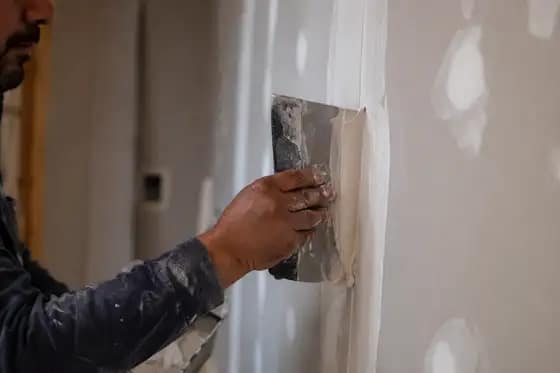
Drywall costs in Delaware range from $2.00 to $4.00 per square foot installed in 2026, putting the state roughly 8% above the national average. Labour rates drive most of that difference. Delaware sits in the mid-Atlantic corridor between Philadelphia and Baltimore, and skilled tradespeople here command higher wages than in inland markets. According to CostFlowAI’s 2026 regional data, the average skilled labour rate for drywall work in Delaware runs approximately $52 per hour.
That range covers a complete installation: hanging the boards, taping the seams, applying joint compound in multiple coats, and sanding to a paintable finish. Materials alone run $0.50 to $0.80 per square foot. Labour accounts for 50 to 60 percent of the total bill on most residential projects.
Sussex County coastal projects carry an additional 10 to 15 percent premium because hurricane-rated construction and flood elevation compliance add both material and labour costs. Delaware has no sales tax, which provides a small offset on material purchases.
Drywall Installation Cost by Project Size
The table below shows typical installed costs for Delaware homeowners in 2026. These figures include hanging, taping, three coats of compound, and sanding. They do not include priming or painting, removal of old drywall, or permit fees.
| Project scope | Square footage | Estimated cost |
|---|---|---|
| Single room (bedroom or office) | 300–500 sq ft | $600–$2,000 |
| Multi-room renovation | 800–1,200 sq ft | $1,600–$4,800 |
| Whole floor (walls and ceilings) | 1,200–2,000 sq ft | $2,400–$8,000 |
| Full home (new construction or gut) | 2,000–4,000 sq ft | $4,000–$16,000 |
| Ceiling only (per room) | 150–250 sq ft | $300–$1,000 |
Ceiling work costs more per square foot than wall work. Holding panels overhead while fastening them requires more labour time, and contractors sometimes charge $2.00 to $4.00 per square foot just for ceilings. On vaulted or cathedral ceilings, that number climbs another 20 to 40 percent.
Drywall Cost by Finish Level
The Gypsum Association defines six finish levels, numbered 0 through 5. Most painted walls in Delaware homes are finished to Level 4. Level 5 is the premium standard for spaces that will receive high-sheen paint or strong raking light.
| Finish level | Description | Added cost vs Level 3 | Best for |
|---|---|---|---|
| Level 0 | No taping or finishing | Baseline | Temporary construction only |
| Level 1 | Tape embedded, no finish coat | +$0.10–0.20/sq ft | Attics, fire-rated assemblies |
| Level 2 | Tape plus one skim coat | +$0.20–0.35/sq ft | Garages, tile-covered walls |
| Level 3 | Two coats over tape and fasteners | Baseline | Textured surfaces |
| Level 4 | Three coats, standard painted walls | +$0.35–0.60/sq ft | Most residential walls |
| Level 5 | Full skim coat over entire surface | +$1.00–2.00/sq ft | High-gloss paint, strong light |
Many Delaware homeowners in older homes near Wilmington, Dover, and Newark choose Level 5 finishing when they are repainting after a renovation. The extra investment pays off because Level 5 hides imperfections that would otherwise show through satin or semi-gloss paint.
Drywall Material Costs in Delaware
Standard half-inch drywall sheets cost $10 to $20 per 4×8 panel at Delaware retailers including Home Depot and Menards. Each panel covers 32 square feet. For a 1,000-square-foot project you need roughly 32 sheets before accounting for cuts and waste. Most contractors factor in a 10 percent waste allowance.
Specialty boards cost more, but solve problems that are genuinely common in Delaware homes:
| Board type | Cost per sheet | When to use it |
|---|---|---|
| Standard 1/2 inch | $10–$15 | Interior walls, most rooms |
| 5/8 inch Type X (fire-rated) | $18–$25 | Garages, party walls, code-required assemblies |
| Moisture-resistant (green board) | $14–$20 | Bathrooms, laundry rooms |
| Mould-resistant (purple board) | $18–$28 | Basements, prior mould history |
| Soundproof drywall | $40–$65 | Home theatres, shared walls |
Delaware’s humid Mid-Atlantic climate means moisture-resistant board is a sound investment in bathrooms, laundry rooms, and anywhere near exterior walls. Many contractors in Sussex County specify mould-resistant board for basements in coastal areas where groundwater pressure is higher.
Drywall Removal Costs
If your project requires tearing out old drywall before hanging new board, budget an additional $0.50 to $1.00 per square foot for removal and disposal. That figure rises to $1.00 to $2.50 per square foot when the existing material is plaster, which is common in older Delaware homes built before 1970.
Water-damaged or mould-affected drywall requires additional steps. The contractor must identify and fix the moisture source first, then treat framing if mould has penetrated, and dispose of contaminated material carefully. Those steps add both time and cost that a standard removal quote will not include.
What Drives Drywall Costs in Delaware
Ceiling height
Standard 8-foot ceilings are the baseline. Anything above 9 feet adds 15 to 25 percent to labour cost because workers need scaffolding, and manoeuvring large panels in a taller space takes more time. Many mid-century homes in Wilmington and Newark have 9-foot ceilings in living rooms, which pushes drywall costs toward the higher end of the range.
Room layout complexity
Open-plan spaces with few corners and straight runs are faster to drywall than rooms with alcoves, multiple angles, or built-in framing around structural columns. Contractors who charge by the sheet price simple rooms less than complex ones because the cutting and fitting time differs substantially.
Access and location
Ground-floor rooms are straightforward. Upper floors, tight stairwells, and basements all add complexity. Basement drywall in Delaware typically requires moisture-resistant board, and low headroom can slow installation considerably. New Castle County urban projects sometimes involve narrow row-home corridors that make material handling slower.
Timeline and demand
Delaware’s renovation market is busiest in spring and summer. Contractors who are heavily booked may charge a premium for urgent starts. Scheduling work in late autumn or winter often results in more competitive bids, though heating costs during installation should be factored in because joint compound must dry in temperatures above 55 degrees Fahrenheit.
Drywall Cost by County
Labour rates vary modestly across Delaware’s three counties. New Castle County, which includes Wilmington and Newark, sees the highest rates because of proximity to Philadelphia’s labour market. Kent and Sussex counties are typically 5 to 10 percent lower for comparable work.
| County | Typical range (installed) | Notes |
|---|---|---|
| New Castle | $2.20–$4.00/sq ft | Highest labour costs, urban complexity |
| Kent | $2.00–$3.60/sq ft | Mid-range, covers Dover and Smyrna |
| Sussex (inland) | $2.00–$3.50/sq ft | Lower labour, materials similar |
| Sussex (coastal) | $2.40–$4.20/sq ft | Hurricane-rated requirements add 10–15% |
Do You Need a Permit for Drywall Work in Delaware?
Most drywall repair and like-for-like replacement does not require a permit in Delaware. However, several situations do trigger permit requirements:
- Drywall work that is part of a structural alteration or addition
- Installing fire-rated assemblies required by code (garages, party walls)
- Basement finishing that adds habitable square footage
- Any work associated with electrical, plumbing, or HVAC modifications
Permit requirements differ by municipality. The City of Wilmington, the City of Dover, and Newark each have their own building departments with local amendments to the state code. If you are unsure whether your project requires a permit, contact your local building department before work begins. Your contractor should advise you on this as part of the quoting process. A contractor who cannot tell you whether your project needs a permit is a contractor worth questioning.
How to Get an Accurate Drywall Quote in Delaware
Before reaching out to contractors, measure your space. Calculate wall area by adding the perimeter of the room, multiplying by the ceiling height, and subtracting the area of doors and windows. Ceiling area is simply length times width. Having accurate measurements lets you compare contractor quotes on an equal footing.
When collecting quotes, ask each contractor to specify:
- Whether the price includes taping and finishing or just hanging
- What finish level they are quoting
- Whether joint compound, tape, and fasteners are included or billed separately
- Their approach to corner beads and transitions
- Whether clean-up and dust containment are included
Getting three quotes is the baseline. Delaware contractors who are busy often do not bid competitively because they do not need the work. If two quotes come in close and a third is significantly lower, ask the low bidder to walk through their scope in detail. The gap is usually explained by a missing scope item, not a better price.
Frequently Asked Questions
How long does drywall installation take?
A single room typically takes one to two days for hanging, plus two to three additional days for taping and drying between coats. Multi-room projects run five to ten days. Whole-home projects can take two to three weeks depending on size and crew. Joint compound must dry fully between coats, and rushing that process causes cracking and poor finish quality.
Can I install drywall myself to save money?
Hanging boards is physically demanding but learnable. Taping and finishing to a Level 4 or Level 5 standard is a skilled trade that takes years to master. Most homeowners who attempt their own finishing end up with visible seams and joints, particularly when paint and light reveal the imperfections. For rooms with high-sheen paint or strong natural light, professional finishing is almost always worth the cost.
What is the difference between drywall and plasterboard?
They are the same material. Drywall, plasterboard, gypsum board, and sheetrock all refer to panels of gypsum plaster sandwiched between two layers of paper. Sheetrock is actually a brand name owned by USG Corporation, but the term is used generically in the trades.
Does Delaware have no sales tax on drywall materials?
Correct. Delaware is one of five US states with no sales tax, which reduces the material cost of a drywall project compared to neighbouring states like Maryland and Pennsylvania. On a $2,000 material purchase, that represents a saving of roughly $120 compared to Maryland’s 6 percent rate.
How soon can a room be painted after drywall installation?
After the final coat of joint compound is applied and sanded, the surface should be primed before painting. Most contractors recommend waiting 24 to 48 hours after the final sand before applying primer, depending on humidity and temperature. Delaware’s summers are humid, which can extend drying time. Your contractor will advise on timing based on site conditions.
Ready to Get a Quote for Your Delaware Drywall Project?
Delaware Drywalls matches homeowners with one verified, licensed drywall contractor for their project. You submit your details once. We review your project and introduce you to a single contractor who is licensed, insured, and active in your county. No bidding. No spam. No sales calls from six companies at once.
Start your free quote request and hear back within 24 hours.
 English
 Español de México